Invent Your Perfect Solana Launch With Meteora

https://launch.meteora.ag/A Solana launch is not one decision. It is a chain of choices: how supply enters the market, where liquidity sits, how users interact onchain, and how the project grows after the first wave of attention.
That is why a fixed launch template often feels too small. Some teams need a simple liquidity setup. Others need staged actions, custom pool behaviour, partner participation, or a launch flow that fits a very specific token model. Meteora is built for that more flexible reality.
The idea behind Invent With Meteora is simple: give builders enough tools to shape the launch they actually want, instead of forcing every project through the same door.
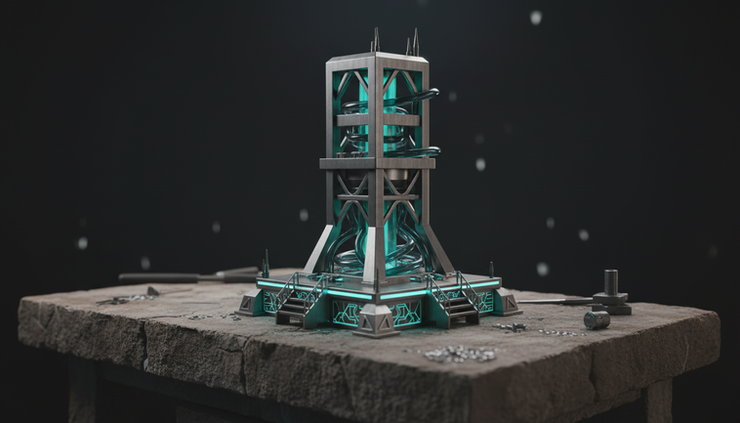
Solana launches need more than speed
Solana gives projects a strong base: fast settlement, low fees, and a large user base that understands onchain products. But speed alone does not make a launch work.
A launch needs:
A clear liquidity plan
Tools that can handle onchain execution
Room to customise launch mechanics
A way for users and liquidity providers to participate
Control over actions before, during, and after launch
Many teams learn this late. They focus on the first transaction, then realise the real work starts when the market opens. Liquidity has to be usable. Token distribution has to match the project’s goals. Users need a clean path to interact. The launch has to survive the first hour, the first day, and the first week.
Meteora helps by giving builders access to a set of Solana-native liquidity and launch tools. Instead of treating a launch as one event, it lets teams design a fuller onchain flow.
The brief says it best: there are many ways to launch on Solana. Use our comprehensive set of tools to customize and INVENT your perfect launch. That flexibility is the point.
What “inventing” a launch really means
Inventing a launch does not mean adding complexity for its own sake. It means choosing the right mechanics for the project.
A memecoin launch, a points-driven community token, a protocol governance asset, and a creator-led token may all need different paths. They may share the same chain, but they do not share the same goals.
Some projects want maximum openness from the start. Some need staged participation. Some care most about deep liquidity. Some want careful onchain actions tied to vaults, pools, or user flows. Meteora’s value is in giving builders a broad set of parts to work with.
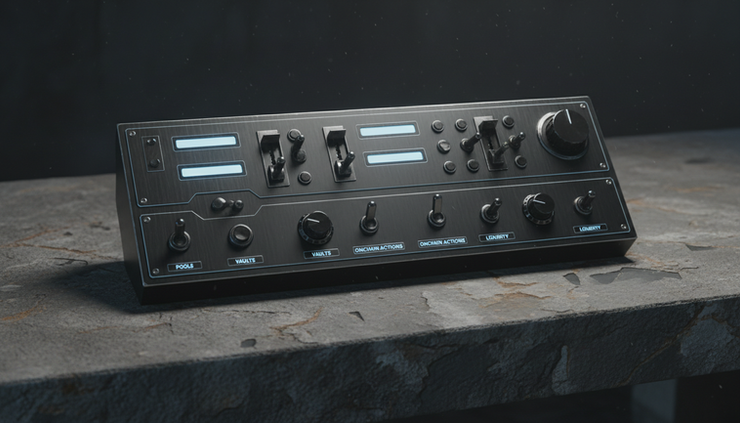
Think of the launch as a control panel rather than a switch.
Launch choice | Why it matters |
Liquidity source | Determines how easily users can buy, sell, and enter the market |
Pool design | Shapes how liquidity behaves as price moves |
Onchain actions | Lets teams set actions that happen directly through Meteora programs |
Participation flow | Affects who can join, when they can join, and how they interact |
Post-launch support | Helps the market avoid thin, fragile liquidity after launch day |
The best launch design starts with the question: what should users experience onchain?
From there, the tools become easier to choose.
Meteora gives builders a wider toolset
Meteora is not only about placing liquidity in one pool and walking away. Its broader role in the Solana ecosystem is to help liquidity become more active, useful, and accessible.
For a launch, that matters because liquidity is not a background detail. It is part of the product experience. If liquidity is too thin, users face poor pricing and low confidence. If the launch structure is too rigid, the team may struggle to adapt. If onchain actions are scattered, the process becomes harder to reason about.
Meteora’s programs give builders ways to create and manage liquidity flows on Solana. Depending on the project’s needs, that can support:
Token launches that need custom mechanics
Liquidity positions designed for specific market conditions
Onchain actions connected to Meteora programs
Access to active liquidity providers
Launch formats built around different user journeys
This is where customisation becomes useful. A team does not have to ask, “Which one launch format must we accept?” It can ask, “Which combination fits our token, community, and market?”
That is a better starting point.

Customisation is useful only when it is practical
Every launch claims it is custom. The real test is whether the team can turn that custom plan into onchain execution without stitching together too many fragile parts.
A practical custom launch needs three things.
The launch mechanics must match the project
A project should not copy another launch just because it looked successful. The same format can produce very different results when the community, token design, and timing are different.
For example, a token with broad community demand may need enough liquidity to handle heavy early activity. A smaller protocol asset may care more about stable access and measured distribution. A project with active DeFi users may want launch mechanics that connect directly with pools and liquidity actions.
Meteora supports a more tailored approach, where the launch can be built around the actual token plan instead of a generic path.
The onchain actions must be clear
“Onchain” should mean more than a transaction hash. It should mean that the important parts of the launch happen in a transparent, verifiable way.
Meteora programs let teams execute actions directly on Solana. That can reduce reliance on vague offchain promises and give users a clearer view of what is happening. Builders still need to communicate carefully, but the core actions can live where users expect them: onchain.
Clear execution helps teams answer basic launch questions:
What happens when liquidity is added?
Which program handles the action?
How do users interact with the launch?
What changes after the launch begins?
Which steps can the community verify?
A launch does not need to be complicated to be credible. It needs to be understandable.
The setup must support the launch after day one
Launch day gets the attention, but the next phase often decides whether the market feels healthy.
If liquidity fades or sits in the wrong range, users feel it. If the team cannot adjust its approach, the project may lose momentum. If liquidity providers have no reason to participate, depth can weaken.
Meteora’s liquidity focus helps teams think past the first spike of interest. The better question is not only “How do we launch?” It is “How does this market keep functioning after launch?”
The LP Army can make liquidity feel alive
Liquidity is strongest when real participants care about providing it. Meteora’s LP Army points to that idea: a network of liquidity providers that can bring depth and activity to launches.
For builders, this matters because liquidity is not only a technical setting. It is a social and economic layer. People choose where to place capital. They look for pools, incentives, expected activity, and projects with enough demand to make participation worthwhile.
Access to thicker liquidity can help a launch feel more usable from the start. It can also reduce the risk of a market that looks live but feels thin when users arrive.
This does not remove the need for a thoughtful launch plan. No liquidity network can fix weak communication, unclear mechanics, or a token model that users do not understand. But when a project has a strong plan, the LP Army can give it a better chance to meet real demand.
Thick liquidity is not just about size. It is about giving users a market that feels ready when they arrive.
What a custom Meteora launch can include
A launch built with Meteora can take different shapes. There is no single correct form, but there are common building blocks teams can think through.
Liquidity pool planning
This includes where liquidity should sit, how it should respond to trading, and what kind of user activity the team expects.
A high-attention launch may need a different liquidity profile than a quiet, utility-focused token. Builders should decide whether they expect fast early movement, slower discovery, or a more controlled path.
Onchain execution flow
This is the sequence of actions the launch needs on Solana.
It could include pool creation, liquidity movement, user participation, or other actions tied to Meteora programs. The key is to design the flow before the launch, test what can be tested, and explain the steps clearly.
Participant experience
A launch is not only what the team does. It is what users do.
They need to know how to join, what they are interacting with, and what risks exist. Crypto users are often willing to act fast, but they still need clear instructions and visible mechanics. Confusion creates mistakes.
Liquidity provider alignment
Liquidity providers need enough context to decide whether a launch is worth supporting. A project can help by making the launch plan clear and by building around tools that support active liquidity.
The stronger the alignment between the project, users, and liquidity providers, the better the launch experience can become.
A useful launch plan starts with the right questions
Before choosing tools, teams should answer a few hard questions. These questions make the Meteora toolset easier to use because they turn a broad set of options into a launch design.
What should happen at the first moment of launch?
The first actions set the tone. Decide what users can do right away, where liquidity will be, and how the market should open.
How much control does the launch need?
Some launches benefit from simple open access. Others need custom steps or staged actions. The more custom the design, the more important clear onchain execution becomes.
Who is expected to provide liquidity?
If the project relies only on its own liquidity, the launch may look different from one that expects wider LP participation. If the LP Army is part of the plan, the project should make that participation easy to understand.
What does success look like after 24 hours?
Avoid measuring only the launch moment. A healthier goal may include usable liquidity, clear user participation, and a market that continues to function after the first rush.
Which risks should users understand?
Every token launch carries risk. Prices can move sharply. Liquidity can change. Smart contract and market risks exist. Clear communication does not remove risk, but it helps users make informed choices.
This content is informational only and is not financial advice.
Build for flexibility without losing clarity
Custom launches can become messy if every possible feature gets added. The best launch design uses flexibility with discipline.
A good rule: every launch component should have a job.
If a pool setting, liquidity action, or participation step does not serve the launch goal, it may not belong. More tools should create a better experience, not a harder one.
Meteora’s strength is that it lets teams shape the path. That does not mean every project should use every option. It means projects can select the pieces that fit.
Simple launch mindset | Invented launch mindset |
Use the default route | Choose the route that fits the token |
Add liquidity once | Plan liquidity as part of the full launch |
Treat users as late arrivals | Design the flow around user actions |
Hope LPs show up | Make liquidity participation part of the plan |
Focus only on launch day | Prepare for what happens after launch |
The invented launch is not always bigger. It is more intentional.
Meteora fits the builder who wants control
The strongest reason to use Meteora for a Solana launch is control over design.
Builders can work with a comprehensive set of tools, execute onchain actions through Meteora programs, and connect with liquidity through the LP Army. That combination supports launches that are tailored to the project’s needs and wants.
For a team building on Solana, this can change the planning process. Instead of asking which template to follow, the team can map the desired launch and then match tools to that design.
That makes room for cleaner mechanics, stronger liquidity planning, and more transparent onchain execution.
The takeaway
There are a million ways to launch on Solana because projects are not all trying to do the same thing. A launch should reflect the token, the community, the liquidity plan, and the onchain experience users will actually touch.
Meteora gives builders room to invent that path. Use the tools to customise the launch mechanics. Execute meaningful actions onchain through Meteora programs. Bring liquidity into the plan early, not as an afterthought. Build with the first hour in mind, but design for the days that follow.
The perfect launch is not the loudest one. It is the one that fits the project and works when users arrive.


Comments