How Solana Is Building a Carbon Neutral Energy Efficient Web3

https://climate.solana.com/A blockchain does not have to burn huge amounts of electricity to be useful. That idea sits at the centre of Solana’s climate story. As web3 grows from speculation into payments, finance, gaming, infrastructure, and digital identity, energy use becomes more than a technical footnote. It becomes a design choice.
Solana’s answer is built around speed, low fees, and a proof-of-stake model that avoids energy-heavy mining. The network’s sustainability work also reaches beyond protocol design. The Solana Foundation has supported carbon measurement, public reporting, renewable energy conversations, and offset efforts intended to account for emissions linked to network activity.
The result is a useful case study in what a lower-energy blockchain can look like. The claim is not that web3 has no footprint. Every server, validator, data centre, device, and transaction touches the physical world. The better question is whether a network can scale while keeping that footprint small, measured, and addressed.
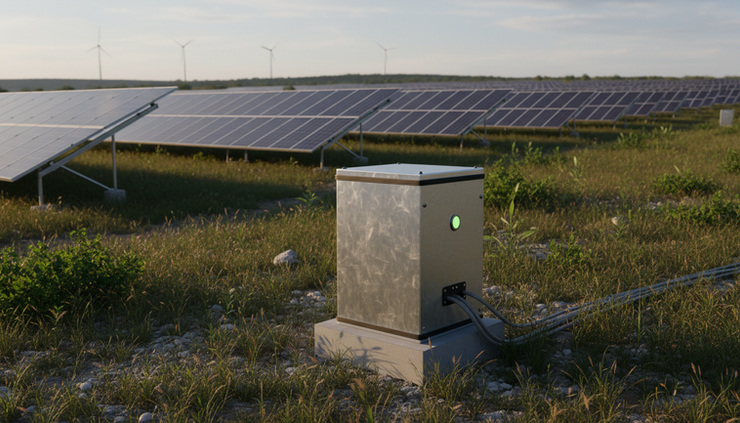
Why energy use became a blockchain issue
For many people, blockchain energy use became linked with proof-of-work mining. In proof-of-work systems, miners compete by running specialised hardware to solve cryptographic puzzles. That process can be secure, but it can also use large amounts of electricity.
That history shaped the public view of crypto. It made a simple question hard to avoid: if a network becomes popular, does its environmental cost grow with it?
Solana belongs to a different category. It uses proof of stake, where validators help secure the chain by staking tokens and running network software. Validators still need electricity. They run servers, store data, process transactions, and communicate with other nodes. Yet they do not compete through energy-intensive mining.
That distinction matters. A proof-of-stake chain can process activity without tying security to ever-larger power use. For a high-throughput network like Solana, this is part of the design promise: handle many transactions while keeping the energy cost per transaction low.
The broader climate goal is not only to use less energy than older models. It is to make web3 infrastructure accountable in the same way other digital services are increasingly expected to be accountable. Cloud computing, streaming, artificial intelligence, and mobile networks all rely on electricity. Blockchains should not be exempt from scrutiny.
Solana’s technical design starts with efficiency
Solana was built for high throughput. That means the network aims to process many transactions quickly, without pushing users into high fees during normal activity. Energy efficiency benefits from that design because the network can spread the fixed cost of infrastructure across more usage.
A validator does not use zero power when the network is quiet. It still runs. It still connects. It still maintains the chain. If a network can process more transactions through the same broad set of machines, each transaction can carry a smaller share of the network’s total energy use.
Several parts of Solana’s architecture support that model.
Proof of stake avoids mining competition
Solana validators secure the network by participating in consensus, not by racing to burn electricity. This reduces the need for specialised mining farms and constant hardware escalation.
Validators still compete in other ways. They need reliable machines, strong connectivity, and good operations. But better performance does not require the same energy profile as proof-of-work mining.
Proof of history helps coordinate time
Solana is known for combining proof of stake with proof of history, a cryptographic timing method. Proof of history helps the network order events efficiently. It does not replace consensus, but it helps validators agree on sequencing with less back-and-forth communication than some other designs require.
Less coordination overhead can support faster processing. It can also reduce wasted effort, which matters when the goal is an efficient network.
Low fees make small transactions practical
Energy efficiency is not only about the machines. It is also about what the network can support. If fees are high, users often reserve blockchain activity for large transactions. Low fees make smaller actions practical, from token transfers to app interactions.
That can be positive if the infrastructure remains efficient. It means developers can build applications without assuming every on-chain interaction must be expensive or energy-heavy.
Of course, low fees can also lead to spam if safeguards are weak. Solana has had to improve its fee markets, networking, and validator software over time. Sustainability includes this kind of engineering work because wasted transactions still consume resources.
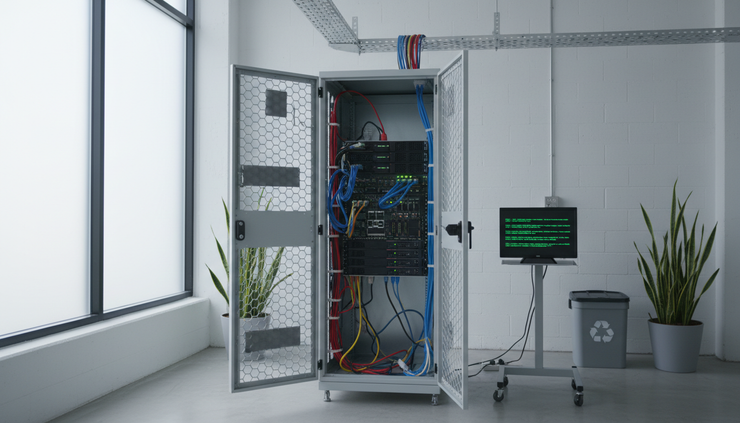
What carbon neutral means for a blockchain
“Carbon neutral” can sound simple, but it has layers. A network can reduce its emissions directly, account for the remaining footprint, and then support projects that remove or avoid emissions elsewhere. These are not the same action.
For Solana, the sustainability story has generally involved two tracks:
Reducing energy intensity
This comes from the network’s proof-of-stake design, efficient throughput, validator improvements, and infrastructure choices.
Addressing remaining emissions
This involves measuring the network’s footprint and supporting carbon offset or removal efforts to balance emissions that cannot yet be eliminated.
That is why the stronger framing is not “blockchain without impact.” It is: Carbon neutral. Climate focused. The network aims to minimise energy use first, then account for what remains.
There is a fair criticism here. Carbon offsets vary in quality. Some projects are more durable, measurable, and additional than others. A serious carbon neutral claim should make room for that concern. Offsets should not become a licence to ignore direct emissions.
A better model puts reduction first. That means efficient protocol design, renewable-powered infrastructure where realistic, and transparent reporting. Offsets can play a role after that, especially while the wider grid still depends on fossil fuels in many regions.
Measurement makes sustainability harder to fake
Climate claims need numbers. Without measurement, “green” becomes a slogan.
The Solana Foundation has published information about network energy use and carbon footprint over time, including estimates tied to validator operations. These reports have aimed to make the network’s impact more visible, rather than leaving users to guess.
For a decentralised network, this can be hard. Validators run in different places. They use different hosting providers, hardware, data centres, and electricity mixes. Some may run on cleaner grids. Others may not. A foundation cannot control every machine, but it can encourage better data and better norms.
A useful blockchain sustainability report should try to answer questions like:
Question | Why it matters |
How much electricity does the validator network use? | This gives a baseline for energy impact. |
Where are validators located? | Grid mix affects carbon emissions. |
What hardware do validators use? | Efficient machines can reduce wasted power. |
How much activity does the network process? | Throughput affects energy per transaction estimates. |
What emissions are offset or removed? | Carbon claims need clear accounting. |
None of these figures stay fixed. Networks change. Validator counts shift. Hardware improves. Activity rises and falls. Grid emissions change by country and season.
That is why one-time claims are less useful than repeated measurement. A climate-focused chain should show progress over time and update assumptions when the network changes.
This is also where the phrase Explore the Solana Network's Sustainability becomes more than an SEO phrase. To understand the issue, look at design, measurement, validator behaviour, and carbon accounting together. Any single metric gives an incomplete picture.
The community shapes the footprint too
The Solana Foundation can publish reports and support climate initiatives, but the network’s footprint also depends on thousands of choices made across the ecosystem.
Validators choose hardware. Developers choose how much data to write on-chain. App teams decide whether every tiny event needs a transaction or whether some logic belongs off-chain. Infrastructure providers decide how to host RPC nodes and indexers. Users decide which applications earn attention.
That means sustainability is a community practice, not only a foundation programme.
Validators can improve operations
Validators play a direct role because they run the machines that secure the network. Better operations may include:
using energy-efficient hardware that meets network requirements
colocating in data centres with strong power management
choosing hosting providers with cleaner energy where available
keeping software updated to reduce waste and improve performance
avoiding overbuilt setups that consume more energy than needed
There is a balance. Validators should not weaken reliability in the name of lower power use. A fragile network is not sustainable either. The goal is efficient resilience.
Developers can design lighter apps
On-chain computation has a cost, even when user fees are low. Developers can reduce needless resource use by writing efficient programmes and storing only what needs to be on-chain.
For example, an app might keep permanent settlement data on Solana while storing large media files elsewhere. That choice can reduce chain bloat and keep validator requirements more manageable.
Efficient app design also helps decentralisation. If resource demands rise too much, fewer people can afford to run infrastructure. A sustainable network should keep participation as broad as possible.
Users can reward practical infrastructure
Users often think sustainability is someone else’s job. In decentralised systems, usage patterns matter. People support the ecosystem they choose to use. Apps that value efficient design, transparency, and long-term reliability deserve attention.
This does not mean every user must become a carbon accountant. It means sustainability can become one signal of quality, alongside security, cost, speed, and usefulness.
Climate-focused web3 needs useful applications
Energy efficiency matters most when the network supports real use. A low-energy chain with no useful activity is not a climate solution. A lower-energy chain that helps people move value, build open infrastructure, or coordinate climate work can be more meaningful.
Solana’s low fees and high throughput make it suitable for applications that would struggle on slower or more expensive chains. These can include payments, decentralised finance, on-chain markets, community tools, and data-heavy consumer apps.
There is also room for climate-specific use cases. For example:
tracking environmental assets with clearer public records
building transparent markets for certain digital climate instruments
supporting local or global climate funding tools
creating low-cost payment rails for community energy projects
giving researchers and builders open data access where privacy and accuracy allow
These ideas still need careful design. Climate markets have real risks, including double counting, weak verification, and low-quality credits. A blockchain does not solve those problems by itself. It can improve transparency and settlement, but the underlying climate data must still be credible.
The best role for Solana may be as efficient public infrastructure. It can provide fast, low-cost rails. Climate experts, project developers, auditors, and local communities still need to provide the real-world trust and measurement.
The hard parts Solana still has to face
A credible sustainability story should include the gaps.
Solana has faced technical challenges in its history, including periods of network instability. Those events are not only user-experience problems. They also matter for sustainability because failed transactions, congestion, and duplicated work waste resources.
The network has improved through software upgrades, better client diversity efforts, fee market changes, and infrastructure work. Still, long-term sustainability depends on continued reliability.
There are other challenges too.
Hardware requirements can affect decentralisation
High throughput can demand stronger machines. If validator hardware requirements become too expensive, the network could become less decentralised. That would weaken one of the core promises of public blockchains.
Efficiency must include accessibility. The network should aim for performance without pushing validation into the hands of only the largest operators.
Carbon accounting must stay transparent
Carbon neutral claims need clear methods. The ecosystem should keep asking basic questions:
What emissions are included?
Which assumptions are used?
Are offsets high quality?
Are emissions reduced before they are offset?
How often are the figures updated?
These questions make the claim stronger, not weaker. Public scrutiny helps climate-focused projects avoid empty marketing.
More usage still means more total infrastructure
Even an efficient network may consume more total energy as usage grows. That is true for nearly every digital system. The aim is not to pretend growth has no cost. The aim is to keep energy per unit of useful activity low while improving the energy mix behind the network.
This is where renewable energy and data centre choices matter. A proof-of-stake design gives Solana a lower-energy base, but the physical infrastructure still sits on real grids.
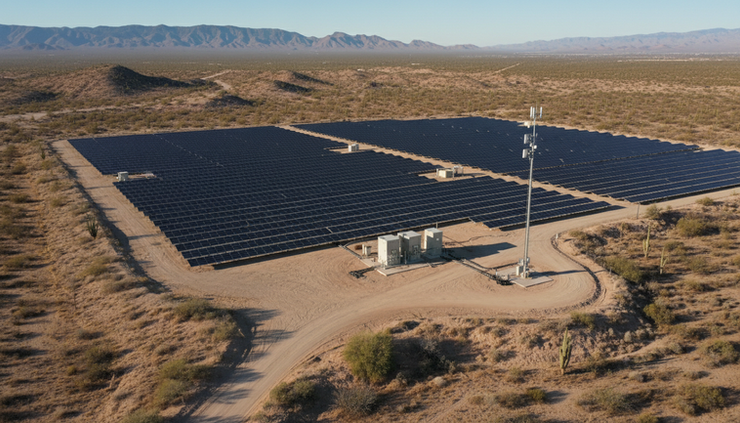
What Solana’s approach says about the future of web3
Solana’s sustainability work points to a broader shift in web3. The industry can no longer treat energy use as a side issue. Networks will be judged not only by speed, fees, and developer activity, but also by their cost to the planet.
The strongest version of Solana’s climate story has three parts.
First, the protocol avoids energy-heavy mining. Proof of stake gives the network a more efficient base than proof-of-work systems.
Second, the network is designed for high throughput. If many transactions can be processed by a relatively efficient validator set, the energy intensity of each transaction can stay low.
Third, the Foundation and community have treated measurement and carbon accounting as part of the public conversation. That does not make the work finished. It makes it visible.
The next step is steady improvement. More efficient validator clients, better infrastructure choices, clearer reporting, cleaner energy, and practical climate applications can all push the network in the right direction.
Solana’s best sustainability argument is not perfection. It is direction. A public blockchain can be fast, affordable, and conscious of its environmental impact at the same time. If web3 is going to earn a place in everyday digital life, that balance will matter.


Comments