Teen Invents Plant Based Plastic That Cleans Up Microplastics as It Breaks Down

Plastic pollution is no longer only a problem of bottles on beaches or bags caught in hedges. Some of the most worrying plastic waste is almost invisible.
Microplastics, plastic fragments smaller than five millimetres, have spread through rivers, oceans, soil, food chains, and even the bodies of humans and animals. They can come from larger plastics breaking apart, synthetic clothing fibres, tyre wear, packaging, and countless everyday products. Once they scatter, they are hard to collect and harder to remove.
That is the problem Arya Satheesh, an 18-year-old student from Letterkenny in County Donegal, Ireland, decided to study. After spending the past couple of years focused on microplastics, she created an award-winning material called Eco Purge, a plant-based plastic designed to help clean up microplastics as it biodegrades.
It is the kind of student invention that feels both practical and unusually hopeful. Rather than simply asking how to make less plastic, Satheesh asked a sharper question: could a replacement material also help remove some of the plastic pollution already in the environment?
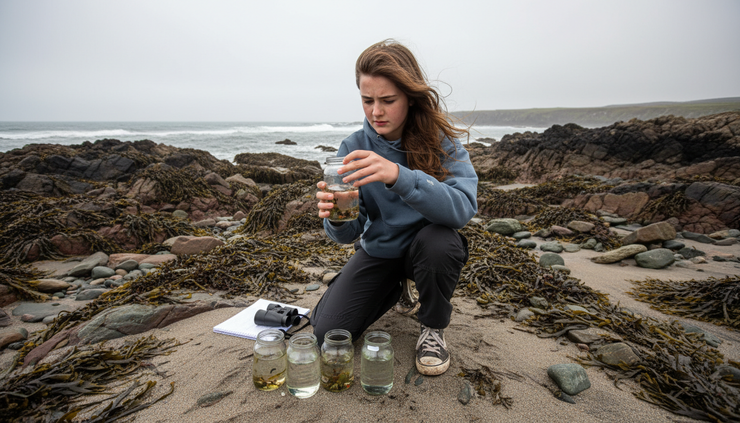
Why microplastics are such a stubborn problem
Microplastics are small by definition, but their impact is large because they spread so easily. A fragment less than five millimetres wide can travel through wastewater, drift in rivers, settle into sediment, or be eaten by small organisms. From there, it may move through the food web.
They do not behave like one single pollutant. Microplastics include many shapes and materials:
Fragments from broken packaging, containers, and larger plastic debris
Fibres shed from synthetic fabrics during washing and wear
Pellets used in plastic manufacturing
Films and flakes from bags, wrappers, and weathered materials
Rubber-like particles from tyres and road wear
That variety makes cleanup difficult. A beach cleanup can remove visible litter, but it cannot easily pick out tiny pieces mixed into sand. A filter can capture some particles in water, but it may not work equally well in soil, storm drains, ponds, or marine environments.
The problem also keeps renewing itself. Large plastic waste can break down into smaller and smaller pieces through sunlight, abrasion, waves, heat, and time. That means yesterday’s plastic bottle can become tomorrow’s cloud of fragments.
This is why the search for solutions has widened. Better waste collection matters. Reducing single-use plastic matters. Stronger wastewater filtration matters. New materials matter too, especially if they can replace conventional plastics without creating another long-term pollution problem.
Eco Purge sits in that materials category. Its promise is not just that it is plant-based, but that it may help pull microplastic particles from the environment as it biodegrades.
What Arya Satheesh created
Satheesh’s invention, Eco Purge, has been described as a Plant-Based Plastic That Removes Microplastics. In simple terms, it is a biodegradable material made from plant-based components, designed with the added function of attracting or binding microplastic particles while it breaks down.
That is an unusual pairing.
Many “eco” materials focus on what happens after use. They aim to decompose, compost, or reduce reliance on fossil-fuel-based plastics. Eco Purge goes a step further by trying to interact with pollution already present in its surroundings.
The idea matters because biodegradable materials often get judged by one main question: what do they leave behind? Satheesh’s project adds a second question: what could they take with them?
If a material can safely break down while helping collect microplastics, it could open the door to a different way of thinking about cleanup. Instead of relying only on machines, nets, or filters, scientists could explore materials that work passively in the environment, provided they are safe, tested, and carefully designed.
That last point is key. A promising student invention is not the same as a finished commercial product ready to be spread across waterways. New materials need testing for how they degrade, what by-products they create, how well they work in real-world conditions, and whether they affect plants, animals, or microbes.
Still, the concept is powerful. It gives researchers and young inventors a clear direction: materials should not only do less harm, they should help repair some of the harm already done.

How a biodegradable cleanup material could work
The public details about Eco Purge are limited, which is normal for a young inventor’s developing project. But the general science behind the idea is understandable.
A material that helps remove microplastics would need to do at least three things well.
It needs to attract particles
Microplastics can float, sink, or suspend in water depending on their type, shape, and age. Some are smooth. Some are rough. Some collect biofilms, oils, or other substances on their surfaces.
A cleanup material might use texture, charge, surface chemistry, or natural binding agents to help trap those particles. Think of the difference between water sliding off polished glass and dirt sticking to a damp sponge. The surface matters.
For Eco Purge, the reported focus is on a plant-based plastic that can interact with microplastic fragments as it biodegrades. The exact mechanism would need to be tested and published before anyone could judge how effective it is across different environments.
It needs to break down safely
Biodegradability sounds simple, but it is not one fixed thing. A material may break down quickly in an industrial composting facility, more slowly in soil, and very differently in cold seawater.
A useful biodegradable material must be tested under the conditions where people expect it to work. That includes looking at:
Breakdown rate
Residue left behind
Effects on local organisms
Performance in fresh water, salt water, and soil
Whether captured microplastics remain contained
The goal is not just to disappear. The goal is to avoid creating new pollution.
It needs to be recoverable or harmless at the end
If a material binds microplastics, the next question is what happens to those trapped particles. Do they remain attached? Can the material be collected? Does it settle somewhere safe? Could animals ingest it?
These questions do not weaken the idea. They are exactly the questions that turn a promising invention into a serious environmental tool.
A cleanup material would be most useful if it fits into a clear system. For example, it might be used in controlled water treatment, drains, filtration units, or targeted polluted sites rather than being released freely into open ecosystems.
Why a high school project can matter
It is easy to underestimate student science because it often begins with simple materials, school labs, and local testing. Yet many important ideas start that way.
High school research can matter for three reasons.
First, students often ask direct questions. They are not locked into the usual boundaries of one industry or discipline. Satheesh’s project connects plant-based materials, pollution cleanup, biodegradation, and microplastic science in one idea.
Second, student projects can bring attention to neglected parts of a problem. Plastic pollution is widely discussed, but microplastics are still hard for many people to picture. A project like Eco Purge makes the issue more concrete.
Third, young inventors can push public imagination. Solving plastic pollution will not come from one product or one law. It will require many approaches working together. When an 18-year-old spends years studying microplastics and develops an award-winning response, it sends a useful message: the problem is huge, but it is not untouchable.
Satheesh’s location adds another layer. Letterkenny, in County Donegal, is not a global plastics capital. It is a town in northwest Ireland, near landscapes shaped by coast, rain, rivers, and rural life. Environmental science does not only happen in major research centres. It can begin wherever someone notices a problem and keeps testing ideas.

The bigger shift toward plastics that do more good
For decades, the plastics conversation centred on convenience. Plastic was light, cheap, strong, flexible, and easy to shape. Those same strengths became environmental weaknesses when products were used briefly and discarded carelessly.
Now the question is changing. A good material is not only judged by how well it performs during use. It is judged by its full life:
Where its raw materials come from
How much energy it takes to make
Whether it can replace high-waste products
What happens after disposal
Whether it breaks into harmful fragments
How it affects ecosystems over time
Plant-based plastics are part of this shift, but they are not automatically perfect. Some require specific composting conditions. Some compete with land or crops. Some still behave like plastic if they escape into the environment.
That is why Eco Purge is interesting. Its value is not in the label “plant-based” alone. It is in the attempt to build a material with an active environmental role.
If future testing supports the idea, similar materials could be designed for specific settings. A filter insert might capture microfibres from laundry water. A biodegradable pad could collect particles in stormwater drains. A controlled cleanup tool could bind fragments in contaminated ponds. These are not claims about Eco Purge as a finished product but examples of where the wider concept could lead.
The key is control. Environmental cleanup needs careful design because good intentions can cause harm if materials are released without enough testing.
What still needs to be proven
Eco Purge has earned recognition as an award-winning invention, but the path from student project to real-world environmental solution is long. That is true for nearly every new material.
Before a product like this could be widely used, researchers would need answers to several practical questions.
How well does it remove different kinds of microplastics? A material that captures one type of fragment may not capture another. Fibres, films, beads, and rubber-like particles can behave differently.
How does it perform outside the lab? Real water contains sediment, salt, organic matter, bacteria, oils, and changing temperatures. These can affect how any material works.
What does biodegradation actually produce? Safe breakdown products are essential. A material cannot solve one pollution problem by creating another.
Can it be scaled without causing new burdens? Plant-based inputs still need land, water, processing, and transport. A good environmental solution has to make sense across its full life cycle.
What happens to the captured microplastics? Cleanup is only real if particles are contained, removed, destroyed, or kept from spreading further.
These questions are not reasons to dismiss the invention. They are the normal next stage for a strong idea. The best environmental technologies survive tough testing because ecosystems are complex.
The most useful plastic solutions will reduce new waste while helping manage the pollution already present.
Why this story feels hopeful without being simplistic
Plastic pollution can feel overwhelming because it is everywhere. It is in oceans, soil, city runoff, clothing fibres, packaging, and supply chains. No single invention can reverse that alone.
Yet stories like Satheesh’s matter because they point to a more creative future. A teenager looked at one of the most difficult pollution problems on Earth and built a possible response from plant-based materials. That does not solve microplastics overnight. It does expand the field of what a solution can look like.
Eco Purge also reminds us that cleanup and prevention should work together. Reducing plastic use remains essential. Designing better products matters. Improving recycling and waste systems matters. Keeping plastics out of waterways matters. New materials can add another layer, especially when they are designed with end-of-life in mind from the start.
The smartest path is not to wait for a single miracle material. It is to build many smaller solutions that reduce the flow of plastic, capture what escapes, and avoid leaving future generations with even finer fragments to clean up.
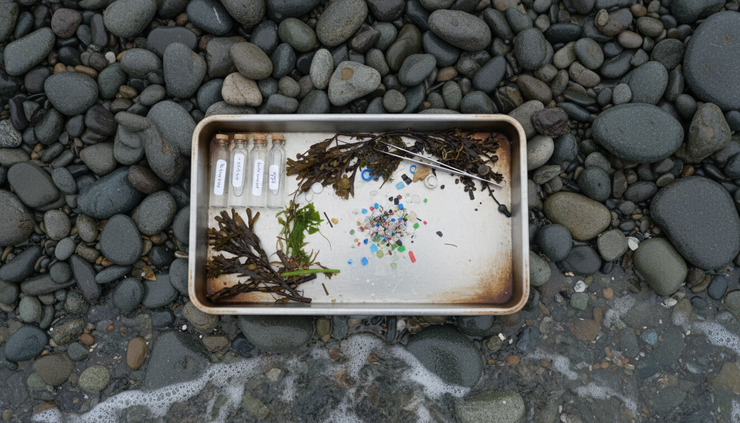
A small invention aimed at a massive problem
Arya Satheesh’s Eco Purge stands out because it changes the usual story of biodegradable plastic. It is not only about making a material that goes away. It is about asking whether a material can help clean as it disappears.
That idea needs more testing, careful review, and real-world proof. But it is exactly the kind of thinking the plastics crisis demands. The world needs fewer throwaway materials, better waste systems, and safer alternatives. It also needs young scientists willing to take on problems that older systems have failed to solve.
Microplastics may be tiny, but the challenge they pose is enormous. Eco Purge shows how one focused student, working from a clear environmental concern, can imagine a material that does more than replace plastic. It can help repair part of the damage plastic has left behind.


Comments